Friday, 4 March 2022
Bill Proposing Punishment for the Siblings of the Corrupt Must Be Dropped
The Nigerian Senate is considering a Bill seeking to prescribe punishment for family members confirmed to have benefitted from the proceeds of corruption, especially by a civil or public servant. The Proceeds of Crimes (Recovery and Management) Bill 2021, sponsored by the member representing Taraba Central Senatorial District, Senator Yusuf Yusuf seeks to establish a Commission to handle forfeited assets acquired through criminal and illegal activities. The Bill proposes punishment for corrupt people, their spouses, children, siblings and parents who have benefitted from the proceeds of corruption.
It is noteworthy that during the senate public hearing on the Bill, the Money Laundering (Prevention and Prohibition) Bill 2021 and the Public Complaints Commission (Repeal and Re-Enactment) Bill 2022 the Economic and Financial Crimes Commission objected to the creation of a new agency to manage forfeited assets since the EFCC was well positioned to handle it. We stand by EFCC that another agency is superfluous and unnecessary. Moreover, it is worthwhile to listen to the Central Bank Governor, Mr Godwin Emefiele who urged the National Assembly that an amendment to the Money Laundering Act of 2011 would best serve the interest of Nigeria.
Though corruption has eaten deep into the lives of Nigerians, it could be stopped and should be eradicated. The extant laws should be strengthened by borrowing leaves from other Common Law countries. The issues bedeviling our judicial system include impunity, insincerity in the anti-corruption fight and incompetence on the part of our staffers of the judiciary, the ministry of justice and the investigating agencies such as the police and the Economic and Financial Crimes Commission (EFCC).
Which is why agents of the executive often bungle corruption cases, starting with poor investigations that culminates in insufficient evidence to convict the accused in court. For example, the former governor of Delta States James Ibori was charged to court on 170 counts for money laundering by the EFCC. In 2009, Ibori was discharged and acquitted by a judge who did not even take the plea of the accused. In 2010, Ibori was arrested in Dubai, United Arab Emirates, after escaping extradition in Nigeria, he was flown to the United Kingdom where he was charged to court on 10 counts of fraud. He was convicted and jailed for 13 years.
The difference in judicial incompetence was that while the EFCC charged Ibori with 170 frivolous charges, which the fickle Nigerian judiciary didn’t even understand before squashing. The United Kingdom court got incontrovertible evidence, filed tight charges, and the diligent judiciary dispensed veritable justice. Linked to our woes of insincerity is the knack of our executive’s for disobeying court orders. In spite of orders of the court, the former National Security Adviser, Sambo Dasuki was detained for four years, only for the prosecution to keep the case in limbo owing to lack of diligent prosecution.
The case of the former Petroleum Minister, Diezani Madueke is another example. In spite of huge sums of money and properties recovered from her and other beneficiaries since 2015, the Federal Government has failed to diligently pursue her extradition to face criminal charges in Nigeria. That goes to show the penchant for insincerity by Nigeria’s government officials. Another instance of corruption connivance was the case of the former Gombe State governor, Danjuma Goje, a sitting senator, he was accused of embezzling N25 billion. After meeting President Buhari in 2019, the case against him was dropped when the Attorney General of the Federation filed a nolle prosequi and the case was struck out. This was after the EFCC had spent over N150 million pursuing the matter over eight years.
The judiciary too cannot escape blame. The courts have not implemented fully, the Administration of Criminal Justice Act to ease access to justice in the land. Some judges continually throw out corruption cases based on technicalities, sacrificing fairness, equity and justice. Some of our judges are surprisingly lenient. For example, a Federal High Court judge sitting in Jos, Plateau State after trial lasting four years, jailed a former Minister of Water Resources Sarah Ochekpe and two others to two years imprisonment for money laundering involving N450 million. The judge gave them the option of fines. Such judicial discretion cannot deter treasury looters.
Many corrupt politicians have escaped justice leveraging on compliant judiciary. The judiciary sometimes creates ‘sacred cows.’ Three judges of coordinate jurisdiction gave conflicting ex parte orders in matters with the same parties. An investigation committee indicted them. In December last year, the Chief Justice of Nigeria only warned and barred them from promotion for two years. That is yet another connivance with corruption. In 2013, A judge of the Federal High Court Abuja, Abubakar Talba, jailed the assistant director of the Police Pensions Board, Yakubu Yusuf for only two years for stealing N24 billion. Yusuf immediately paid the bail option and left a free man. After a public outcry, the ruling was later overturned at the Appeal Court which sentenced him to imprisonment for six years and N22.9 billion fine. Talba was only suspended for one year by the National Judicial Council.
Corruption is growing in Nigeria, extending poverty, weakening institutions and stunting development. To stamp it out, all hands must be on deck to ensure the guilty does not continue exploiting the timidity and weakness of the common man. Thus, strengthening existing laws with every Nigerian becoming vigilant is the solution. In a recent television interview over the delay in the trial of the former Secretary to the Government of the Federation, Bachir Lawal, the AGF, Abubakar Malami blamed the judiciary that the conclusion and determination of cases “is exclusively a judiciary affair.”
However, in his rebuttal, the Chief Justice of Nigeria said the AGF was not correct, citing instances where the executive would file more charges than it could prove. The CJN squarely put the blame at the feet of the executive. We agree with the CJN. The executive should stop condoning corruption, insincerity and impunity.

How to Accelerate the Growth of Nigerian Economy
By Bayo Ogunmupe
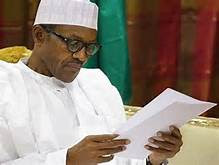 In the year 2021, the Nigerian economy recorded the highest growth of its GDP since 2014, beating the expectations of economists and the projections of the International Monetary Fund (IMF) and the World Bank. The economy grew by 3.4 percent in full year 2021 compared to a contraction of 1.94 percent in full year 2020, according to data from the National Bureau of Statistics (NBS).
International financial institutions like the World Bank and the IMF had predicted the economy would record a GDP growth rate of 2.6 percent for its full year 2021. The Federal Ministry of Finance had estimated a growth of 2.5 percent while the projection of the Central Bank of Nigeria (CBN) was 3.1 percent. After two recessions induced by the pandemic, Africa’s biggest economy came out of its worst recession in 33 years growing by 0.11 percent in the fourth quarter of 2020.
According to the full year 2021 report, the non oil sector grew by 4.4 percent compared to a contraction of 1.25 percent in 2020. However, the oil sector contracted 8.06 percent in 2021 compared to a contraction of 1.25 percent in 2020. Nigeria’s oil production declined to 1.50 million barrels a day in the fourth quarter of 2021 from 1.57 million barrels a day in the third quarter. Nigeria has not benefited from rising oil prices as she is battling to increase her oil production.
Economic sectors such as rail transportation, solid minerals, electricity and gas grew 36.9 percent, 34 percent and 27 percent respectively. The laggards were oil refining-47.9 percent, crude petroleum and natural gas-8.3 percent and mining and quarrying-7.7 percent. The World Bank expects the economy to expand by 4.2 percent in 2022; the IMF 2.7 percent, the CBN 2.86 percent and the Federal Government projects a growth of 4.2 percent.
But the President of the World Economic Forum Dr Borge Brende agues that the world needs an equitable, sustainable and resilient post-pandemic global economy. He says opportunity now exists to lay the foundations of a resilient and sustainable world economy. Truly, at this moment the world economy faces strong headwinds, there is an opportunity for world leaders not only to accelerate growth in the near term, but to lay the foundations for a sustainable economy for the years to come.
In January this year, the IMF released projections indicating that global growth will slow from 5.9 percent in 2021 to 4.4 percent in 2022. This is half a percentage point lower than what had been forecast last October. Alongside this acceleration, economists believe persistent inflation will partially erase economic gains; with the expectation of rising interest rates slowing investment. On top of this, 60 percent of low income countries are in debt distress or at risk of debt interest. There comes the Russia- Ukraine war which at the moment of writing threatens the nuclear annihilation of the United Kingdom.
These are momentous times, with no doubt great challenges. But there are opportunities for gains ahead. However, these depend if leaders put in place policies to revitalize economies and also address shared priorities in the near, medium and long terms; there is a chance to fuel confidence and build resilience –the key ingredients for economic growth now and in the future. One, we need inclusive growth. To achieve this in Nigeria, there is need to bring on more unbanked transactions via Small and Medium Enterprises growth through interest free and collateral free SME loans. Most immediately, Nigeria must ensure economic growth is more inclusive. Many advanced economies have promising forecasts, such as China which saw her exports jump by over $675 billion last year—a 26 percent increase on the year before.
But there remains the recovery will take years in the emerging and developing economies. If inclusive growth is left unaddressed, the divergence will foster not just dire global economic consequences, but humanitarian ones as well. One way to advance a more equitable recovery is by committing to delivering sustainable investment to underfinanced economies. Here, however, Foreign Direct Investment (FDI) is showing signs of growth, as flows of finance were up 77 percent in 2021, surpassing their pre- pandemic level.
Indeed, China experienced a record $179 billion of investment flowing into the country, amounting to a 20 percent year-over-year increase. Yet, global FDI is still fragile, as factors like the COVID19 variants and the Russia-Ukraine war and the rising energy prices can create obstacles to capital flows. Two, in the medium term, we need to empower digital transformation, because the global economy is undergoing rapid technological advancement which the World Economic Forum termed the Fourth Industrial Revolution.
The coming ten years will require each and every company to ensure technology and innovation are part of its DNA. Indeed, an estimated 70 percent of new value over this decade will be based on business models that rely on digital applications. The recent shortage in semiconductors, and the resulting focus in the USA, European Union and China on manufacturing chips, is just one indication of the rapid digital transformation taking place.
The digitization of the world economy is why China’s 14th Five Year Plan has called for the core industries of the digital economy to account for 10 percent of the country’s GDP by 2025, up from 7.8 percent in 2020. Yet, despite the growing importance of the digital, an estimated 2.9 billion people—over a third of the world population—have never used the internet. This is why last year the World Economic Forum brought together leading technology and financial companies, along with government entities, to launch the Edison Alliance, which is working to foster affordable digital access for everyone by 2025.
Three, over the long term, we must commit to going green because climate change is the most important challenge of our lifetime. By some estimates, the global economy could face unprecedented consequences, shrinking up to 18 percent in the next 30 years, if decarbonization efforts are not taken. This does not include the devastation planet Earth would face in terms of biodiversity loss and the loss of human lives.
Reaching net zero climate emissions by 2050 will require fundamentally transforming our economy, as companies and countries change their energy mixes, increase efficiency and invest in new zero-carbon solutions. But a green transition will add millions of jobs and trillions of dollars to the global economy. The First Movers Coalition—a group of 30 leading companies that was launched at COP26 by the WEF and the US Climate envoy John Kerry—is helping to deliver a green economy by boosting demand signals for new low carbon technologies.
Thus, our priority should be a more equitable, digital and green economy. This forces us to rely on greater global cooperation because they are too large, too complex and too interconnected for one company or country to address alone. This why we must move away from a zero-sum mindset, in which global actors believe prosperity can only come at the expense of others. As China’s President Xi Jinping said at the WEF Davos Agenda in January: “The right way forward for humanity is peaceful development and win-win cooperation.”
In the year 2021, the Nigerian economy recorded the highest growth of its GDP since 2014, beating the expectations of economists and the projections of the International Monetary Fund (IMF) and the World Bank. The economy grew by 3.4 percent in full year 2021 compared to a contraction of 1.94 percent in full year 2020, according to data from the National Bureau of Statistics (NBS).
International financial institutions like the World Bank and the IMF had predicted the economy would record a GDP growth rate of 2.6 percent for its full year 2021. The Federal Ministry of Finance had estimated a growth of 2.5 percent while the projection of the Central Bank of Nigeria (CBN) was 3.1 percent. After two recessions induced by the pandemic, Africa’s biggest economy came out of its worst recession in 33 years growing by 0.11 percent in the fourth quarter of 2020.
According to the full year 2021 report, the non oil sector grew by 4.4 percent compared to a contraction of 1.25 percent in 2020. However, the oil sector contracted 8.06 percent in 2021 compared to a contraction of 1.25 percent in 2020. Nigeria’s oil production declined to 1.50 million barrels a day in the fourth quarter of 2021 from 1.57 million barrels a day in the third quarter. Nigeria has not benefited from rising oil prices as she is battling to increase her oil production.
Economic sectors such as rail transportation, solid minerals, electricity and gas grew 36.9 percent, 34 percent and 27 percent respectively. The laggards were oil refining-47.9 percent, crude petroleum and natural gas-8.3 percent and mining and quarrying-7.7 percent. The World Bank expects the economy to expand by 4.2 percent in 2022; the IMF 2.7 percent, the CBN 2.86 percent and the Federal Government projects a growth of 4.2 percent.
But the President of the World Economic Forum Dr Borge Brende agues that the world needs an equitable, sustainable and resilient post-pandemic global economy. He says opportunity now exists to lay the foundations of a resilient and sustainable world economy. Truly, at this moment the world economy faces strong headwinds, there is an opportunity for world leaders not only to accelerate growth in the near term, but to lay the foundations for a sustainable economy for the years to come.
In January this year, the IMF released projections indicating that global growth will slow from 5.9 percent in 2021 to 4.4 percent in 2022. This is half a percentage point lower than what had been forecast last October. Alongside this acceleration, economists believe persistent inflation will partially erase economic gains; with the expectation of rising interest rates slowing investment. On top of this, 60 percent of low income countries are in debt distress or at risk of debt interest. There comes the Russia- Ukraine war which at the moment of writing threatens the nuclear annihilation of the United Kingdom.
These are momentous times, with no doubt great challenges. But there are opportunities for gains ahead. However, these depend if leaders put in place policies to revitalize economies and also address shared priorities in the near, medium and long terms; there is a chance to fuel confidence and build resilience –the key ingredients for economic growth now and in the future. One, we need inclusive growth. To achieve this in Nigeria, there is need to bring on more unbanked transactions via Small and Medium Enterprises growth through interest free and collateral free SME loans. Most immediately, Nigeria must ensure economic growth is more inclusive. Many advanced economies have promising forecasts, such as China which saw her exports jump by over $675 billion last year—a 26 percent increase on the year before.
But there remains the recovery will take years in the emerging and developing economies. If inclusive growth is left unaddressed, the divergence will foster not just dire global economic consequences, but humanitarian ones as well. One way to advance a more equitable recovery is by committing to delivering sustainable investment to underfinanced economies. Here, however, Foreign Direct Investment (FDI) is showing signs of growth, as flows of finance were up 77 percent in 2021, surpassing their pre- pandemic level.
Indeed, China experienced a record $179 billion of investment flowing into the country, amounting to a 20 percent year-over-year increase. Yet, global FDI is still fragile, as factors like the COVID19 variants and the Russia-Ukraine war and the rising energy prices can create obstacles to capital flows. Two, in the medium term, we need to empower digital transformation, because the global economy is undergoing rapid technological advancement which the World Economic Forum termed the Fourth Industrial Revolution.
The coming ten years will require each and every company to ensure technology and innovation are part of its DNA. Indeed, an estimated 70 percent of new value over this decade will be based on business models that rely on digital applications. The recent shortage in semiconductors, and the resulting focus in the USA, European Union and China on manufacturing chips, is just one indication of the rapid digital transformation taking place.
The digitization of the world economy is why China’s 14th Five Year Plan has called for the core industries of the digital economy to account for 10 percent of the country’s GDP by 2025, up from 7.8 percent in 2020. Yet, despite the growing importance of the digital, an estimated 2.9 billion people—over a third of the world population—have never used the internet. This is why last year the World Economic Forum brought together leading technology and financial companies, along with government entities, to launch the Edison Alliance, which is working to foster affordable digital access for everyone by 2025.
Three, over the long term, we must commit to going green because climate change is the most important challenge of our lifetime. By some estimates, the global economy could face unprecedented consequences, shrinking up to 18 percent in the next 30 years, if decarbonization efforts are not taken. This does not include the devastation planet Earth would face in terms of biodiversity loss and the loss of human lives.
Reaching net zero climate emissions by 2050 will require fundamentally transforming our economy, as companies and countries change their energy mixes, increase efficiency and invest in new zero-carbon solutions. But a green transition will add millions of jobs and trillions of dollars to the global economy. The First Movers Coalition—a group of 30 leading companies that was launched at COP26 by the WEF and the US Climate envoy John Kerry—is helping to deliver a green economy by boosting demand signals for new low carbon technologies.
Thus, our priority should be a more equitable, digital and green economy. This forces us to rely on greater global cooperation because they are too large, too complex and too interconnected for one company or country to address alone. This why we must move away from a zero-sum mindset, in which global actors believe prosperity can only come at the expense of others. As China’s President Xi Jinping said at the WEF Davos Agenda in January: “The right way forward for humanity is peaceful development and win-win cooperation.”
Friday, 27 August 2021
The President we want in 2023
By Bayo Ogunmupe
In planning for a great future, you have to make the connection between the present and the future. For you to make changes in the direction you want, you must take certain steps for the Universe to manifest to you your desires. You cannot win the lottery if you don't buy a ticket. You cannot become an author if you don't publish that manuscript into a book. You can't get that job if you don't send in your curriculum vitae. Which is why we must declare to God and country the kind of President we want in 2023. Obviously, Nigeria is not satisfied with the Mohammed Buhari presidency. When we rejected Goodluck Jonathan it wasn't the current perdition we wanted.
In a 2014 paper on leadership travails in Nigeria, the Catholic Bishop of Sokoto Diocese, Bishop Matthew Hassan Kukah declared that all of Nigeria's heads of state and presidents were 'accidental presidents.' That was because they did't prepare for the leadership roles thrusted on them. According to the respected bishop, the main reason Nigeria became the headquarters of poverty in the world is because "the average newcomer as president of Nigeria comes totally unprepared, with no knowledge of the environment, no experience in public life, no knowledge of the bureaucracy, no knowledge of politics and power derived from some years of loyal pupilage."
Thus, as we now begin the process of recruiting the president for 2023, it is essential that the in-coming president must be versed in politicking, understand democracy, the rule of law and federalism. The new president must be fully prepared for the job. Unlike his predecessors who revelled in insincerity, the president we want must be painstakingly sincere. We should know this through his antecedents in governance and friendships. He must have workable answers to true federalism, cession brewing in the Southwest and Southeast. He must hate banditry and Boko Haram for he has to wipe them out by force of arms for peace to reign in Nigeria.
As at the moment, 2023 is more crucial than 2015, since blights have not been resolved, Boko Haram has not been defeated, we're still dependent on oil, and government has not stopped subsidizing both oil and the bureaucracy. If we're to abate the circle of raised and dashed hopes, we must start examining the aspirants now. The process of selecting the flag bearers of the parties should begin now two years to the presidential election. In the aftermath of the jailing of a professor for rigging election, a prima facie case is thereby established for the creation of electoral offences tribunal, not electoral offences commission. The government is still supporting election rigging by its establishment of electoral offences commission. Like the Niger Delta Development Commission or the National Human Rights Commission, it will be ineffective. Government will be shielding its party's election riggers through the commission.
Nigeria's Electoral Act is flawed on the official period for campaigns. At the moment. campaigns are to commence publicly, 90 days before polling day and end 24 hours prior to that day. That short period does not give room for a thorough examination of a presidential aspirant. That is why campaigning has been by subterfuge: celebrating birthdays in far away Kano instead of Lagos; making donations to victims of disasters and hosting colloquiums around the country. With the exception of ending campaigns 24 hours to an election there shouldn't be any time limit as to when aspirants should start campaigns. With only three months into his first term in office, US President Joseph Biden declared publicly, his intention to run for second term in 2024 when speculations were rife that he would be too old then since he is 78 years old at present.
On the idea of accidental presidents, it isn't correct that presidents are performing badly because they are unprepared. There is the party manifestos to go to when short of ideas. There is the Nigerian Bar Association to borrow ideas from. The Academic Staff Union of Universities, the highest body of intellectuals are there to advise any president aspiring to be a great president. Nigeria simply lacks great people. What with other areas of human endeavor? As at my last count, the eight million people of Israel have 14 Nobel prizewinners to 205 million Nigeria's only one. We had better examined the nutrition value of the foods we take, for nutrition determines our metabolism and the quality of our intellect. Where is our corona virus vaccine? The good quality of Israeli home made vaccine enabled Benjamin Netanyahu win a fourth term as premier despite having corruption charges on his neck.
Let us diagnose Nigeria's ailments dispassionately. With current threats to Nigeria's unity, the police being killed in the East, police stations burned along with them, herdsmen being kidnapped in the Southwest, if the president is not zoned to the south, Nigeria might be ungovernable by 2024. Coming under the aegis of Parliamentary Staff Association of Nigeria, staff of the state houses of assembly embarked on a strike on March 23, 2021 with the aim of enforcing the fiscal autonomy for the state assemblies. Also acting under the Judicial Staff Union of Nigeria, staff of judicial arm of government went on a strike from April 6 pressing also for fiscal autonomy for the judicial arm. The common target of these actions remain state governors, who in wilful violation of the Nigerian Constitution, routinely expropriate funds meant for the other arms of government in the states. The net effect of this is arrested development of state legislatures and judiciary. Thus, this impunity by governors don't recommend governors as candidates for president. They're used to impunity and like former presidents will not be able to deliver the Nigeria of our dreams.
The president we want is one who has the courage to create state police just as Bola Tinubu created 57 local governments in defiance of the president and going ahead to win in the Supreme Court. Only those with courage to do the needful, not those with PhD who don't understand federalism. The new president must have the courage to amend the constitution to assure true federalism and the creativity to assemble technocrats for good governance. His forbearance and ability to raise leaders, now competing with him for president, raises Tinubu above any other candidate for president in 2023.
How long can Covid19 vaccination be effective?
By Bayo Ogunmupe
Experts don't know yet how long Covid19 vaccination will be effective. Studies of two prominent Covid19 vaccines suggest they remain effective for at least six months.The chief executive of one vaccine maker said immunity may start to fade within a year. One of the most pressing questions about Covid19 vaccines is how long they can provide protection. It may be decades, or a matter of months - the data necessary to figure that out is accumulating everyday. Pfizer's chief executive said recently that after a few regimen of doses immunity will probably start to fade within a year.
According to the World Health Organization, it's simply too early to know the exact duration of Covid19 vaccines because both the disease and the science deployed against it aren't yet fully understood. But some early evidence is promising. The viruses that caused MERS and SARS are closely related to the Covid19 virus, and acquired immunity to both of those diseases has proven relatively durable. In terms of corona virus research, Pfizer and BioNTech said earlier in April that their vaccines remain effective for at least half a year after the second dose and a study of Moderna's version reflected a similar duration.
Immunization efforts will have to play out further before we can know more for certain. The window of immunity enabled by vaccines could have an impact on efforts to fully re-open the global economy, and re-establish a sense of normalcy. For now, much of the focus has been on getting that first dose on arms, something many countries are still waiting for. Although we've seen mounting criticism over the pace of vaccinations in Europe and elsewhere, North America is still clearly better off than much of the world.
People from wealthy countries who have been at the frontline for vaccines have instantly become test subjects for assessing the duration of vaccination protection against Covid19. Booster shots will help address what will likely be a slow decline of immunity over time. In this way corona virus may look a lot like the flu- which also produces variants and can be addressed with a yearly shot formulated to deal with the latest mutations. historically, other diseases have been quelled in part, thanks to surprisingly lasting periods of immunity.
Memory B cells needed for protection against being re-infected with the deadly Spanish flu that spread around the world in 1918 endured for nearly 90 years, according to one study. And research showed that memory B cells necessary to protect against re-infection with smallpox last about 60 years following immunization. Relatively shorter periods of established immunity won't diminish a Covid19 vaccine development effort that's widely recognized as an extraordinary achievement- and should only increase the public's faith in the positive impact of science.
The messaging surrounding Covid19 vaccines is as important as the science behind them, according to the World Economic Forum's analysts. And this certainly true when it comes to explaining why the US recently paused the Johnson & Johnson vaccine following reports of extremely rare side effects. Even if they had abundant access to vaccines, would some Europeans take them? France, home to the French chemist and discoverer of the principles of vaccination Louis Pasteur and a universal health care system, has also become home to a surprising degree of vaccine resistance.
Bhutan's first vaccine dose was administered to a woman born in the Year of the Monkey amid the chants of Buddhist prayers in March. Since then the country has vaccinated more than 93 percent of its adult population. For many Nigerians, it's hard to feel the momentousness of the season through which we're now living; strangely, the world is uncertain in their celebration of the new Covid19 vaccines. Experts are still investigating others who are most vulnerable to the corona virus infections apart from those nursing diabetes, pneumonia and hypertension.
How governments create poverty in nations
By Bayo Ogunmupe
"The person who follows the crowd will usually go no further than the crowd. The person who walks alone is likely to find himself in places no one has ever seen before,"---Albert Einstein. Successful governance isn't an accident. It requires vision, intention and ideological action. Which is why prosperity among people in a nation doesn't come cheap. It must be planned. When a leader and his team have a predetermined goal, they can only create poverty for themselves and their country. Thus, poverty is often the consequence of choices made by governments. Over time, poverty is the only thing governments can tolerate for any length of time. In a country where poverty reigns, it means their government has failed in their obligation to prosper the people.
In their book: The origins of Power, Prosperity and Poverty; Daron Acemoglu and James Robinson argue that nations are rich or poor depending on the political and economic institutions operating in those countries. The authors maintain that the prosperity of a nation is dependent on the believe system, the incentives granted to businesses and the integrity of the politicians operating in that country. Religious and ethnic conflicts also hinder the economic prosperity of a country.
Most nations started poor. But through the transformation of economies by economic growth planning, many countries progressively moved away from poverty into prosperity. Some world leaders have in the past deliberately created poverty in their countries as politically expedient actions devoid of morality. For example the German dictator, Adolf Hitler saw nothing wrong in the killing of millions of Jews in his quest to dominate Europe. In the same way Boko Haram and bandits are killing and kidnapping Nigerians now in order to dominate the country.
Before World War 11, the leader of the Soviet Union Joseph Stalin, set in motion events designed to destroy, depopulate and cause famine in the Ukraine, an enclave seeking independence from the Soviet Union then. As a result, more than seven million Ukrainians perished in the ensuing famine, in an area which was the breadbasket of Europe at that time. The people were denied food they had grown with their own hands. In four years of his tenure, Pol Pot brought pain, sorrow and poverty to Cambodia the type of which had never been seen before. The combined effects of his forced labour, malnutrition and poor medical care resulted in the death of more than 25 percent of the people of Cambodia. It was estimated that more than eight million people died. We should be doing the same after eight years of Buhari's tenure in 2023.
According to Acemoglu and Johnson the authors aforementioned, argue that economic growth and prosperity are associated with inclusive growth planning. Such planning create institutions that determine the incentives for businesses. The authors in citing examples of how inclusive growth planning makes the difference, cited Nogales county in Arizona, USA which is prosperous as against Nogales Sonora in Mexico which is poor. Nogales is a city divided into two, one is in Mexico, the other half is in the USA. Other contrasts between poverty and prosperity are rich South Korea versus poverty stricken North Korea; one country divided into two as a result of the Korean war.
"The economic disaster in North Korea which led to the starvation of millions, when contrasted with the South Korean economic prosperity is striking; neither culture nor geography can explain the divergent paths of North and South Korea, we have to look at institutions for an answer." so say the authors of Why nations fail. Thus, Nigeria's prosperity can be found in the ideological foundations of our political parties. We only need to imitate both britain and the United States. We need to go back to the British social democratic tradition and ideology to thrive.
For example the British Labour Party -was founded on the liberal and social democratic traditions of the British people. It supports the redistribution of wealth, progressive taxation, limited power of the state. It emphasizes the linkage between liberty and equality, which is why it promotes civil liberty and regional economic planning for inclusive growth and economic diversity. In contrast to our lack of morality and the absence of ideology in our political party system; ethical political ideology has evolved in Britain for centuries, making modifications unlikely. Which is why it is uncommon for members of one political party to switch allegiances. This is why there is a place for morality in politics.
Therefore, our indifference to ideology, morality and integrity, is responsible for our poverty. Until we straighten from this crookedness, we are unlikely to be able to grow and inclusive and prosperous economy. Government everywhere is about making the citizen prosperous. Which is why the Nigerian National Anthem calls on every Nigerian to obey the call for patriotism and nation building. The Nigerian government must be seen to be loyal to the nation rather than to a tribe. The refusal to enlarge the police, and create the Nigeria National Guard to tackle kidnapping and banditry is unpatriotic. It leaves much to be desired.
The government of this country must be seen to be about improving the security and living conditions of the people. The Billions of Naira paid kidnappers so far are more than enough to bankroll half a million policemen to combat the menace of kidnapping and banditry. The insincerity, immorality and lack of patriotism exhibited by our leaders makes nonsense of their faith in God. From their behavior in life and governance our ruling elite neither believe in God nor practice any godly religion. Our politicians must observe the sacredness of their election promises. They're accountable to the people as they must give accounts of their stewardship. Nigerian politicians must stop practising politics without morality. Giving kidnappers money without working for it is causing inflation and making Nigerians poorer than Buhari met them.
Being passionate hastens results
By Bayo Ogunmupe
Passion allows you to be more than you are. It is a key to success as it hastens your ability to get results. Also, it is the thing that ties you to your ambition when you’re not seeing results yet and going through hard times reaching your goal. Most people lack the patience of waiting for results because they don’t exactly know what they want and what their passion is. If you don’t know what you want from life, chances are you drift and fail to achieve much.
This is understandable if you are living at this period of time in history when life is very hectic. Thus, by the end of the day you are exhausted and too sleepy to plan your life’s goals. Then, weekend rolls around with hanging out at parties beckoning, thinking about your dreams will be very far from your attention. However, it is very easy to discover what you want from life. And when you discover what you passionately want in life, you’re much more likely to achieve it.
Here is a technique that help you quickly identify the goals that will be most meaningful to your life. Sadly, by the time many people are 30, they would have had so many setbacks that they would have closed down their ability to dream big. But life is never a bed of roses. Our disappointments enable us become wiser. These setbacks condition us to expect more challenges in the future. Which forces you to overcome your self-limiting beliefs by learning new steps. Indeed, to know exactly what you want to achieve is the lodestar of success.
However, if you are one of the many who don’t know what they want, to discover what you want in life, do the following exercise: Look at your life right now and write out the things that cause you pain. These heartaches could include your career, the location of your home, relationships, your finances and health. The next step is to convert those challenges to concrete goals. You only convert each problem to its opposite to achieve your aims.
If you found for example, your job uninteresting, you could easily create a new goal of finding in six months a new job that you will find both exciting and fulfilling. Thus, for the very reasons that you are currently suffering in any area of your life, you can transform them into powerful goals that will motivate you to create the change that you wish to see.
As the first to create automobiles, Henry Ford of Ford Motors, said: “Whether you think you can, or you think you can’t – you are right.” Many hold themselves back because of their self limiting beliefs. However, you can achieve anything you want in life provided you set clear goals, take right actions and start using the strategies of past goal getters. In the classic book on motivation, Think and grow Rich, its author, Napoleon Hill explains that by summoning up a deep burning desire, you will achieve your goals. This is because desire is a compelling force for change. Though a deep desire to help other people can change the world. However, the all pervading desire for more money and material possessions, is often destructive and completely unfulfilling.
Desire is a powerful creative force without which we cannot live. It is desire that makes us get out of bed in the morning, eat, sleep and work to make a living. Even your ability to read, relax, or listen to music is a fruit of desire. But whenever you create any goal, it is important for you to know why you want that goal. When you uncover your real reason, you will have an awesomely powerful motivating force that will drive your life exactly the direction you both want and need.
When you desire something, it is important to ask yourself why? Is the thing you desire worthwhile and also contribute to the happiness of others? To get the reason for setting a goal, you add “so that” after. The reason for your goal could be: So that I can live my life to the fullest. So that I can positively influence others. So that I can be truly fulfilled. You can easily achieve your goal if your reason for it is altruistic.
Improve the world by taking sides
By Bayo Ogunmupe
“The man dies in him who keeps mute in the face of tyranny-“ Wole Soyinka.
What are you supposed to do when conflict erupts, people get killed and human and property rights are being violated? I believe any person with a heart and moral compass would be compelled to condemn the aggressors. Not doing so is immoral; and raises the risk violent escalation of the wrongdoing. Thus, to hide behind impartiality when we’re not judicial officers is cowardly. Since to sink in silence when we should protest makes cowards of men.
According to the experience of the founder of the World Economic Forum, Dr Klaus Schwab: “I grew up in Germany during and after World War 11 (WW2) and among the most impactful of the moral lessons we were taught were those of Pastor Martin Niemoller. He repented for having done nothing and warned of the consequences.”
To me, his lesson was not so much about the personal price pay for not speaking up in similar situations, but the societal price we pay collectively when injustice is answered with silence. The implication is clear, personal morality is the cornerstone of a just society. Which is why it is the role of everyone of us to speak up when ethical boundaries are being crossed whatever our background or function. Our collective fate depends on it.
It was for these reasons that I attended the South West Zonal Public Hearing of the Senate Committee on the Review of the 1999 Constitution. In the aftermath of the rebellious Oodua Yoruba Republic championed by Sunday Igboho, and the separatist Indigenous People of Biafra (IPOB) I believe the best and peaceful resolution of the Nigerian crisis is through the review of the Constitution.
In spite of the pandemonium surrounding the public hearing, I was able to register and submit my Ogunmupe Constitution Review Memo 2021. The main focus of my memorandum is the creation of six regional governments based on the six geopolitical zones. Holding the same number of legislators each region presently has in the current House of Representatives as its membership of the regional assembly. And as in the Nigerian Constitution 1963, each region shall have full control of all the resources in its domain such as oil, solid minerals.
At the same time, this fifth amendment to the Constitution should abolish the House of Representatives effective from 2023. Thus making the National Assembly a unicameral chamber of senators with each region having 21 senators as the North West currently has; and one senator for the Federal Capital Territory, Abuja. And as part of the cost cutting measures, every legislative house from the senate, the regional house of assembly, the state assembly, and the councilors of the Local Government Councils and Area councils will operate on a part time basis.
Only the principal officers of legislative house shall be on full pay. Constituency projects and allowances are to be abolished. Legislators shall factor their constituency projects into the federal, regional, state, and council budgets. Local Governments shall be in the purview and control of the regional government. Regional governors shall have power to constitute local governments by appointment or cause councils to be elected by electoral commissions. There is no where in the world where local governments are independent. Independence of local governments is a ploy by immigrants to seize land from indigenous peoples.
Two, revenue allocation shall be on the basis of derivation to wit, in accordance with the Nigerian Constitution 1963, the regional government pays 50 percent of her derived revenue to the federation account yearly. She withholds 50 percent. The regions shall maintain their police forces. Nigeria’s current states are too cash strapped to maintain police forces. We had local government police in the First Republic. The existence of local police as against federal police is the hallmark of true federalism.
Three, there should be a 15 member Supreme Court of Nigeria composed of at least two member justices from each region at every given time and all sitting together to decide cases as is done at the Supreme Court of the United States. I have cited the United States because it is the best example of a federation.
Four, the independent National Electoral Commission (INEC) as currently constituted should conduct presidential and National Assembly elections alone. Each tier of government namely, federal, regional, state and local government should create its own electoral body, and conduct its own elections like in the USA and Germany. The immunity clause shielding the president, vice president, governor and deputy governor should be scrapped.
Finally, the current two term presidential tenure should be reduce to one term of six years. And the candidate of the party with the largest number of senators should be declared winner of the presidential election. In the event of a disputed senatorial election, court can only make the challenger and the presumed winner go for a rerun election instead of judge made legislators and governors. Only the ballot box should determine elections. And to save the Nigerian federation from its pitfalls, add as part of the amendment clauses that a region that accepts these terms of true federalism shall be accepted so in the event of some other regions failing to accept regionalism
Reply, Reply All or Forward
Subscribe to:
Posts (Atom)
A CREED TO LIVE BY
Don't undermine your worth by comparing yourself with others. It is because we are different that each of us are special. Don'...

-
Title: 1000 Practical Business Ideas and Directory of Money Sources, Publisher: Biz Lifelines Co, Lagos, 2014 Autho...
-
 Don't undermine your worth by comparing yourself with others. It is because we are different that each of us are special. Don'...
 -
 RESTRUCTURING THE NIGERIA STATE FOR ECONOMIC INCLUSIVENESS AND DEMOCRATIC PEACE THROUGH POLYCENTRIC PLANNING STRATEGY ...